10 Honest Reasons People Who Stand All Day Are Putting These Knobbly Insoles in Their Shoes — and 4 Reasons You Might Skip Them
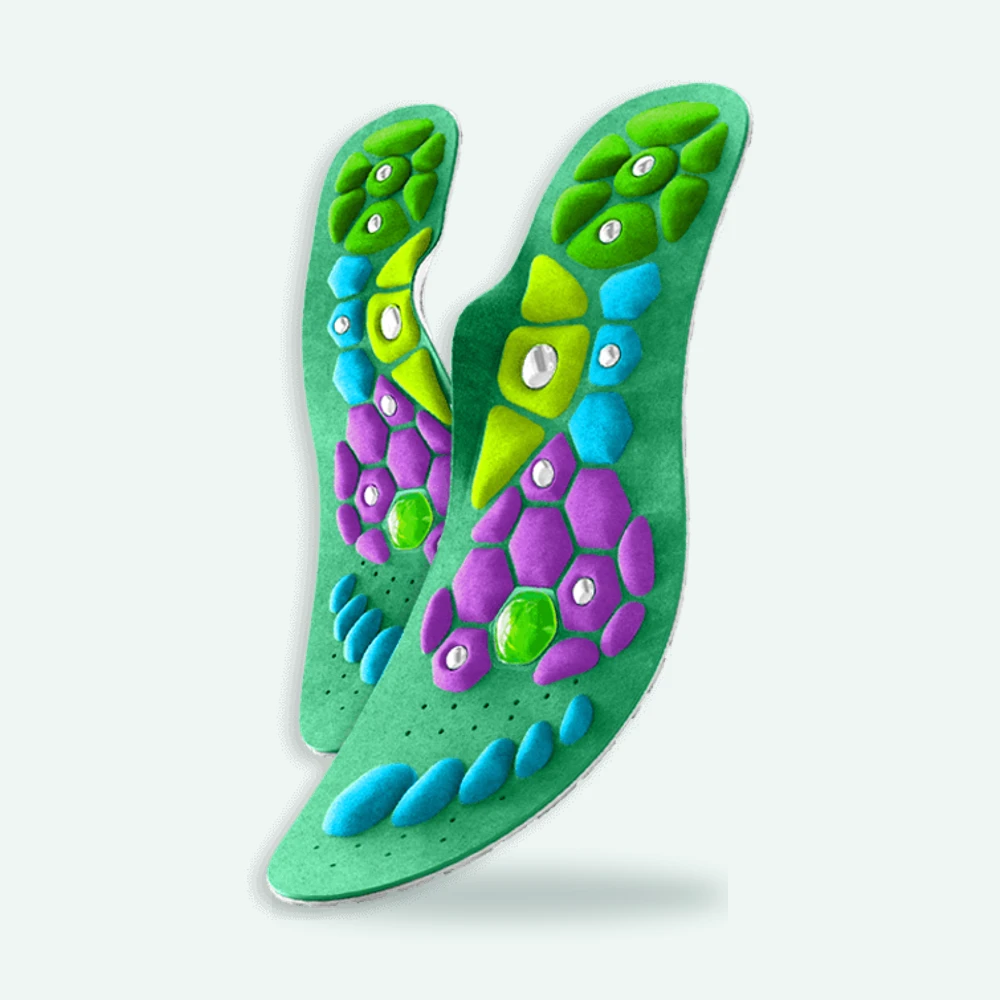
KiSole will not fix your feet, and we are not going to pretend it will. What it does is simpler: it puts a firm, textured, massaging feel under every step of a long day, and you trim it to fit the shoes you already wear.

If you have ever finished a shift on a hard floor and sat in the car for a minute before you could face driving home, you already know the market for insoles is enormous. You also know most of what is sold there makes promises no piece of foam can keep.
So here is a list that does not. KiSole is an insole covered in firm, raised massage nodes, with a shaped arch and a grippy underside. Below are the ten reasons people buy it, stated as plainly as we can, followed by the four reasons some people should not.
One thing up front: KiSole is not a medical device and does not treat any condition. If your feet hurt because something is wrong with them, see a doctor or podiatrist. This is about how a long day feels underfoot, nothing more.
1. You Can Actually Feel It Working Under Your Feet
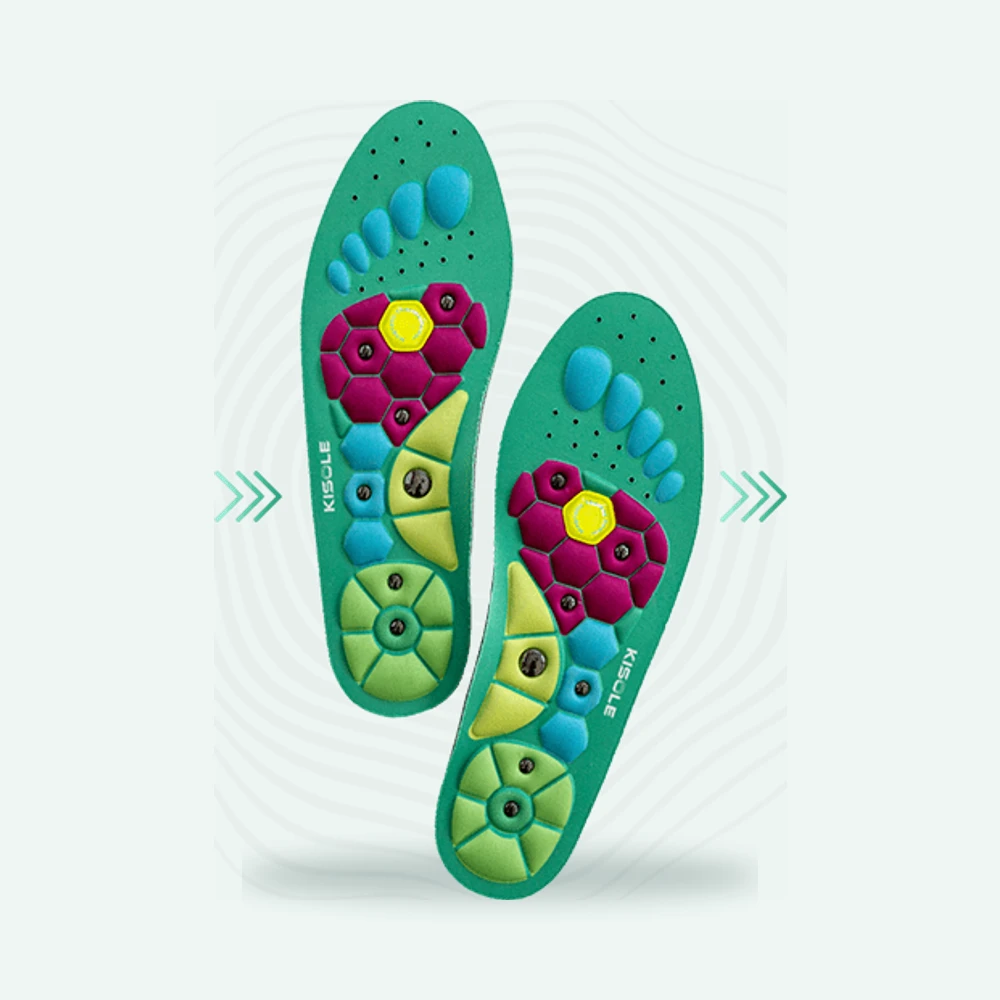
A normal insole is flat foam: you stop noticing it within a minute. KiSole is the opposite. Its top face is covered in firm, rounded nodes, and every time you shift your weight you feel them press back. People describe it as a light foot massage that keeps going while you work.
That is the whole point of it, and it is also why it is not for everyone. Nodes feel firm at first. Most people wear a new pair a few hours a day for the first few days before they switch to full shifts.
2. It Is Made for Long Shifts on Hard Floors
Hospital corridors, shop floors, warehouse concrete, restaurant tiles, classrooms. The people who buy KiSole are mostly people whose job does not come with a chair: nurses, cooks, retail staff, hairdressers, teachers, warehouse pickers.
For them, an insole is not a fashion item. It is the thing between their feet and eight to twelve hours of hard floor, and a textured, massaging surface is a noticeably different way to spend those hours than flat foam.
3. The Arch Is Shaped, Not Flat
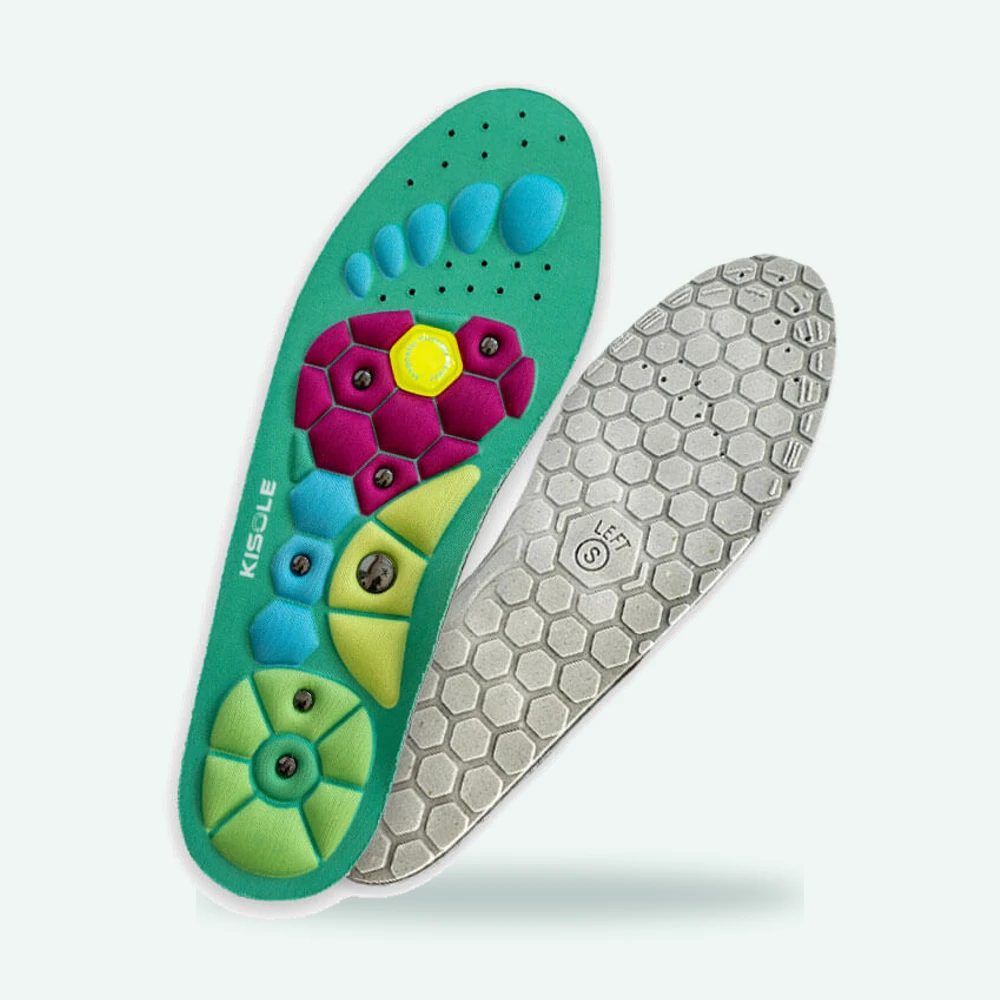
The insole rises under the arch and dips into a shallow cup at the heel, so your foot sits in a shape rather than on a sheet. It is a contour, not a prescription: it is the same shape for everyone in a size, and if you have been fitted for orthotics, keep wearing those.
4. Two Sizes, Then You Trim It to Your Shoe
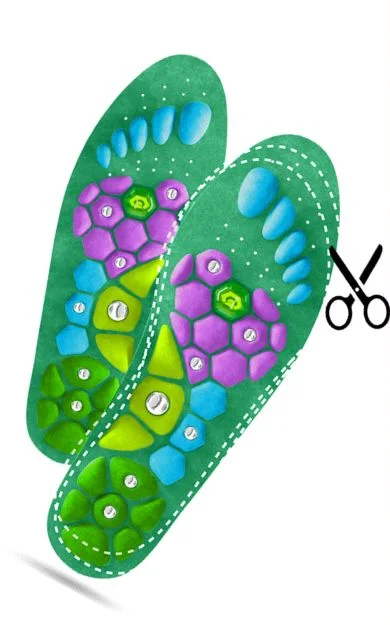
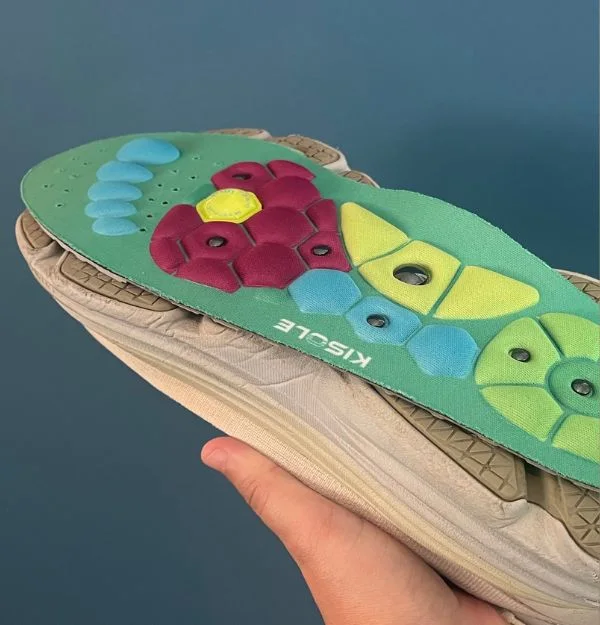
Printed trim lines, and the easy check: hold it against the shoe’s own insole.
KiSole comes in two sizes: Small/Medium covers US 5–10 and Large/Extra-Large covers US 10–14. You pick yours at checkout. When it arrives, lay the shoe’s original insole on top, trace it, and cut along the line with ordinary scissors. Take a little off at a time; you can always cut more, but you cannot put it back.
5. It Goes in the Shoes You Already Own
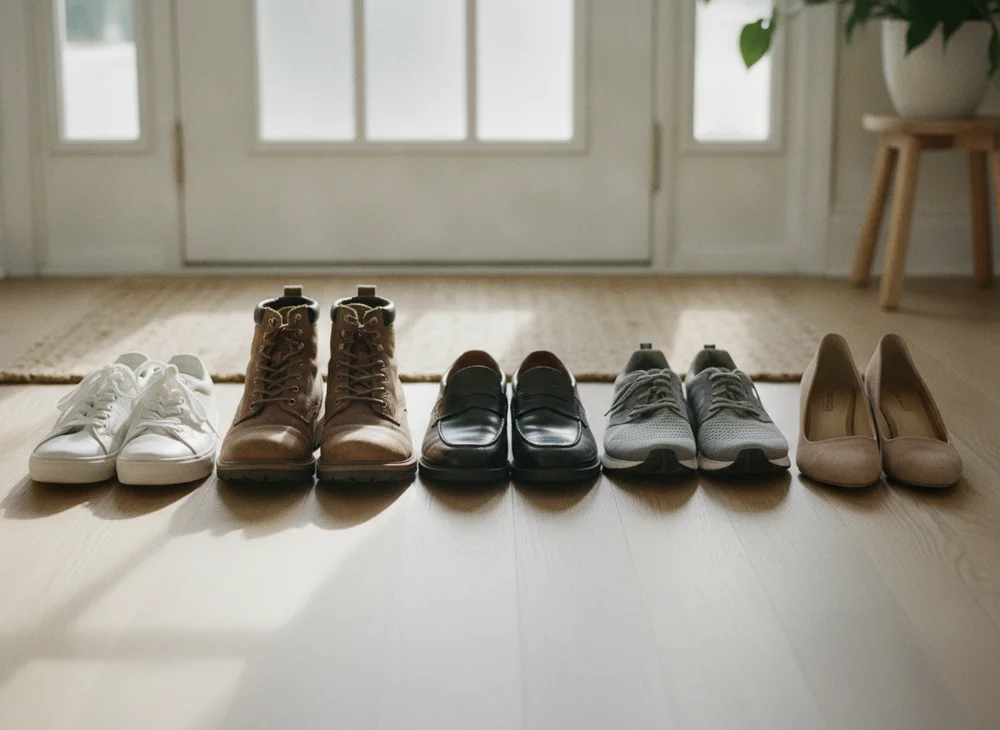
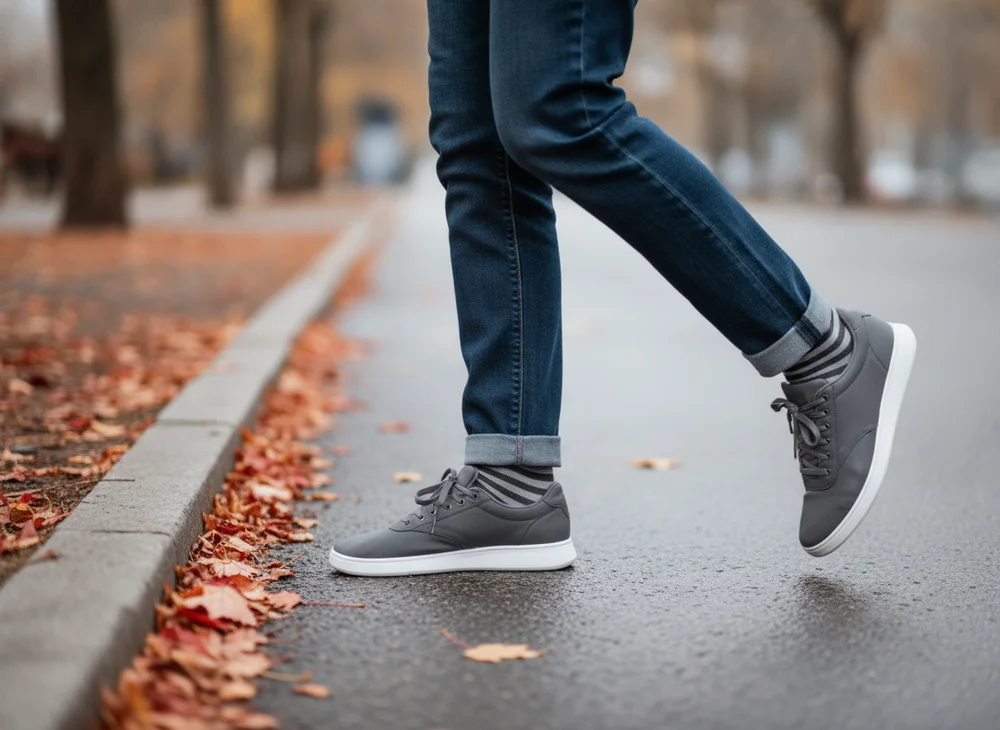
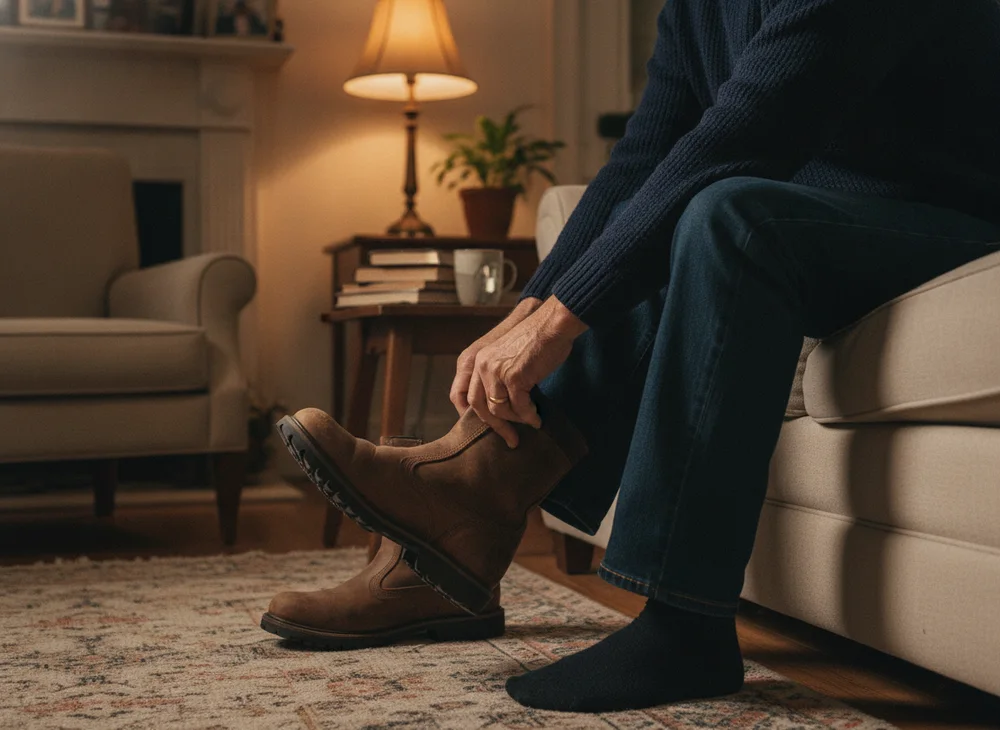
Sneakers, work boots, walking shoes, clogs and most loafers take it well: take the old insole out, slide KiSole in. A narrow dress shoe or a tight heel is a different story. The nodes add a little height, and if the shoe was snug before, it will be snugger now. Try it in the roomiest pair first.
See KiSole Sizes & Today’s PriceFrom $22.95 a pair · free shipping · 30-day returns6. It Is Light
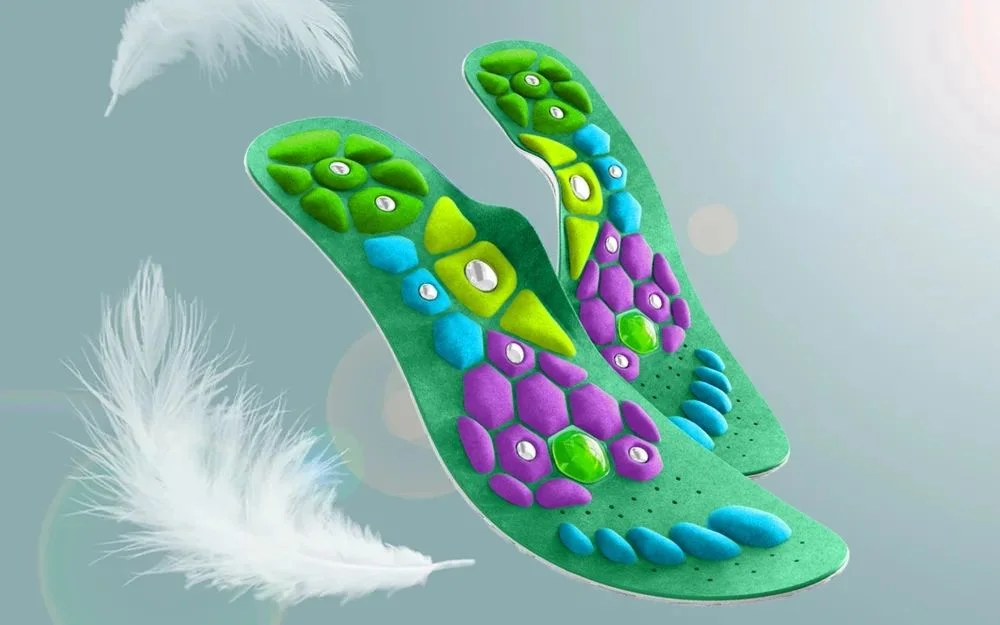
KiSole is a thin, flexible sheet, not a hard moulded shell. It bends with the shoe, weighs very little, and does not make a sneaker feel heavier at the end of the day. If you have tried a rigid insert and given up because it felt like standing on a tray, this is a different kind of thing.
7. The Underside Grips, So It Stays Where You Put It
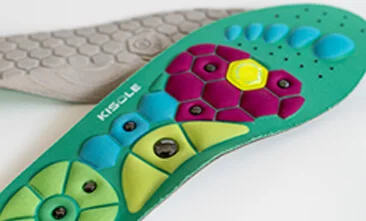
Flip it over and the underside is a honeycomb pattern that holds against the bottom of the shoe. That matters more than it sounds: an insole that creeps forward over a shift bunches under the toes and leaves the heel on bare shoe. If yours starts to slide, it usually means it needs one more careful trim at the toe.
8. A Japanese-Inspired Design, Without the Mystical Promises
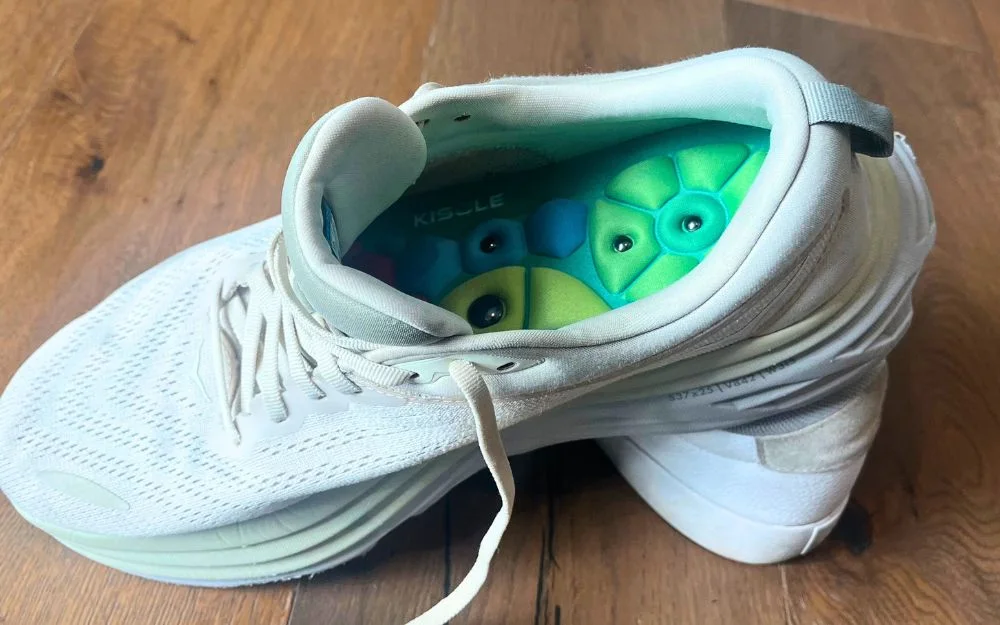
The node layout follows traditional Japanese foot-massage charts, and some nodes have small magnets set into them. You will see a lot of insoles sold with big stories about what those things do inside the body. We are not going to tell you any of them.
The design is where the pattern of the nodes comes from. The magnets are part of the design. We make no claim that either does anything for your health, and nothing in this article should be read as one. What you are buying is the feel.
9. You Get 30 Days to Decide
A firm insole takes a few days to get used to, so judging it on the first afternoon is unfair to both of you. If it is not for you, send it back within 30 days and your purchase is refunded.
10. The Price Per Pair Comes Down If You Want Spares
One pair is $29.95. Most people who stick with KiSole end up wanting a second pair, so the work boots and the weekend sneakers both have one, and the price per pair drops as you add them: two pairs are $55.90 ($27.95 each), three are $77.85 ($25.95 each) and four are $91.80 ($22.95 each). Shipping is free.
Our honest suggestion: if you are not sure yet, start with one pair. If you already know you will want one in every work shoe, two is the sensible middle.
Who Is This For?
If one of these is you, KiSole is worth a try.


Teachers and hairdressers who are on their feet from the first appointment or bell to the last.
Travellers facing a day of airports, museums and cobbles.
Anyone whose shoes came with a thin, flat liner that stopped doing anything months ago.
4 Reasons You Might Skip It
- You want soft and cushy. KiSole is firm and textured on purpose. If what you want is a pillowy gel insole, this is not it, and you will probably not like the first few days.
- Your feet need medical care. Do not use KiSole without asking your doctor or podiatrist first if you have diabetes, neuropathy, poor circulation or reduced feeling in your feet. Firm nodes can press on a foot that cannot feel them.
- You have a pacemaker or another implanted medical device. Some nodes contain small magnets. Ask your doctor before using KiSole.
- You have been prescribed orthotics. KiSole is an off-the-shelf insole, not a replacement for them. Keep wearing what you were fitted for.
What to Know Before You Order
- It is not a medical device. KiSole does not treat, cure or diagnose anything. If you have a foot problem, see a doctor or podiatrist.
- Ask first if your feet need care. Do not use it without asking your doctor or podiatrist if you have diabetes, neuropathy, poor circulation or reduced feeling in your feet.
- It has small magnets in it. Do not use it if you have a pacemaker or another implanted medical device unless your doctor says it is fine.
- The nodes feel firm at first. Ease in: a few hours a day for the first few days. Stop if a spot feels sore rather than textured, and re-check your trim.
The Bottom Line
KiSole is a firm, node-covered, trim-to-fit insole that makes a long day on your feet feel different underfoot.
It is not a cure for anything, and it is not for everyone. But if you stand or walk for a living, like a textured feel and have shoes with a removable insole, it is an inexpensive thing to try with 30 days to change your mind.
Wear it for real shifts. If it is not for you, send it back within 30 days and your purchase is refunded.
How to Get KiSole
- Tap the button below to see the KiSole page, sizes and pricing.
- Pick your size (S/M for US 5–10, L/XL for US 10–14) and how many pairs.
- Enter your details on the secure checkout.
- When it arrives, trace your shoe’s old insole onto it, trim, slide it in, and ease in over a few days.
A closing note. Most insole advertising asks you to believe that a sheet of rubber can do what a doctor cannot. This one asks something smaller: whether a firmer, knobblier surface under your feet would make the tenth hour of a shift feel a bit less like the tenth hour. For a lot of people it does. For some it will not, and now you know which group you are likely to be in.
— The Consumer Desk
See the Full KiSole PageSizes, pricing and fitting guideWhat KiSole Customers Say
I work twelves on a medical floor. The nodes felt odd for two days, then I started missing them in my other shoes. Now there is a pair in both.
Traced my old insole, cut a bit wide, tried it, cut again. Ten minutes for both boots and they sit flat without sliding.
I stand at a register all day. When I shift my weight I can feel the bumps, and it keeps my mind off how long the day is.
I wore them for a full day straight out of the box and my feet let me know. Went back to a couple of hours a day and now I wear them on every walk. Four stars because I should have read the instructions.